Definition
The logo minimum covers one thing only: the smallest quantity of a single hair dryer model we will accept for a custom logo print. It does not cover mixed models, custom paint colours or printed retail packaging, and it never replaces the order minimum. In practice, that figure is 100 units per model, and standard colours within that model can be mixed to reach it.
Key Takeaways
The logo minimum is 100 units per model. It is a per-model number, not a per-order number.
Standard colours can be mixed inside one model to reach 100 units, but different models cannot be combined to fill one model's gap.
Stock items without a logo carry no minimum order quantity; adding a logo, colour or packaging change moves the item out of stock status.
Logo printing is charged per unit below 1,000 units and becomes free at 1,000 units and above.
Printed retail boxes and custom paint colours each run on their own minimum, separate from the unit minimum.
The rest of this guide separates those two numbers in practical terms, because the gap between them is where most launch schedules slip.
Two Numbers, One Confusion
Buyers usually arrive with a total volume in mind: two hundred units, five hundred units, or a container load. Suppliers quote against a different unit of measure, which is the model. When the two are not reconciled before the purchase order is issued, the shortfall only becomes visible at the artwork stage, which is the most expensive moment to fix it.
The Minimum Applies Per Model
Our logo minimum is 100 units per model. That figure is not a discount threshold and it is not a suggestion. It is the point at which a separate print setup, a separate production slot and a separate quality check make sense for one model. An order built from four models at 50 units each totals 200 units and still fails, because none of the four models reaches its own minimum.
Where Colours Fit Inside the Minimum
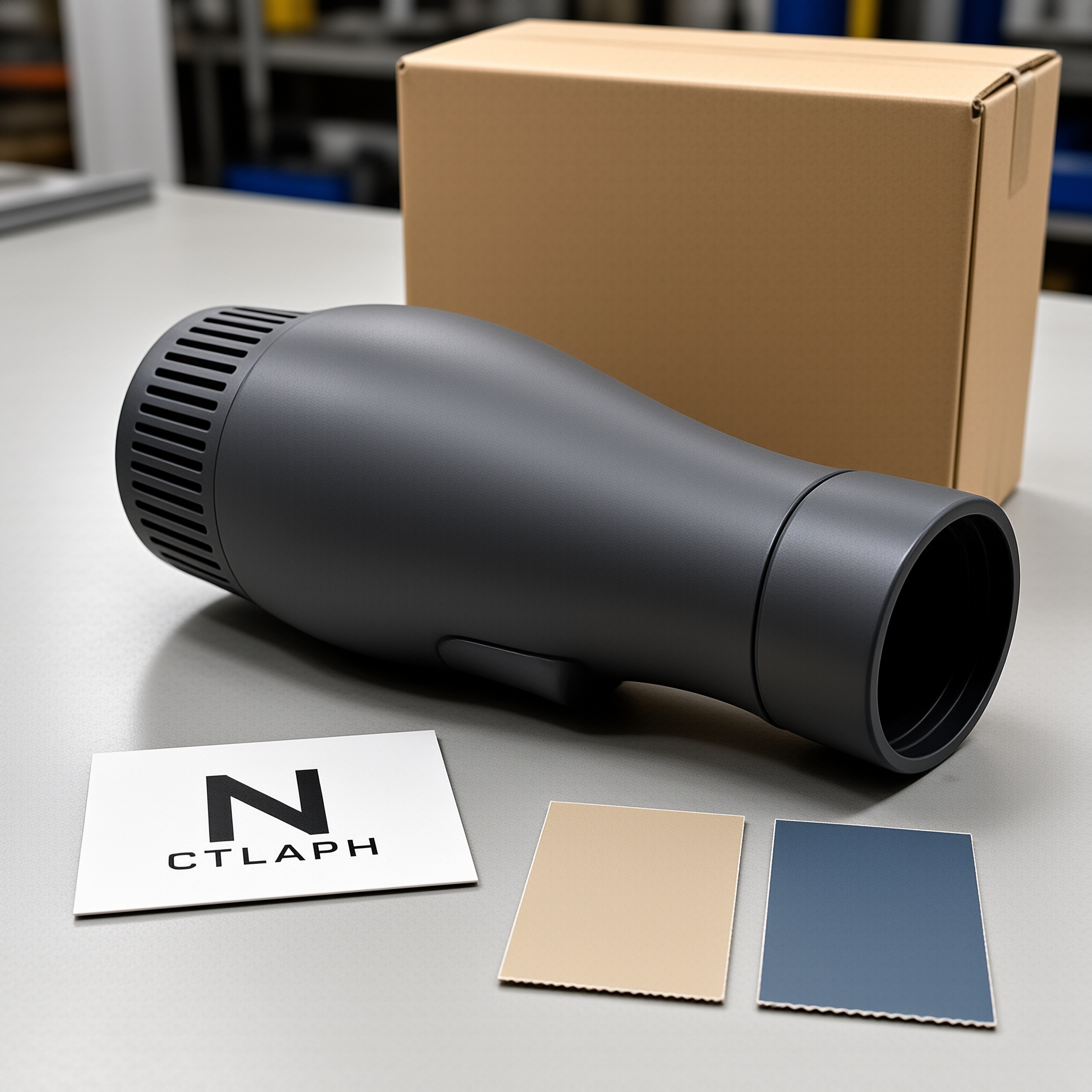
Colours behave differently from models. Within a single model, standard colours can be mixed to reach the 100 units, so a split of 40 in one colour and 60 in another is a valid configuration. This is the lever that lets a brand test a seasonal colour without doubling its commitment. A custom paint colour is not that lever: it runs as its own paint run with a much higher minimum than 100 units, and it should be planned as a separate decision rather than folded into the colour split.
What the Logo Minimum Covers and What It Does Not
The table below is the version we send to buyers before a first quote, because it stops the same four questions from coming back mid-production.
| Planning Element | Covered by the Logo Minimum | Handled Separately |
|---|---|---|
| Quantity | 100 units of one model | Combining several models to reach 100 units |
| Colour | Standard colours mixed within the same model | Custom paint colour, which is a separate paint run with a much higher minimum |
| Logo | One logo artwork printed on the unit | Extra artworks or extra print positions treated as one setup |
| Logo print charge | Free at 1,000 units and above | Per-unit print charge below 1,000 units |
| Packaging | Standard packaging | Printed retail boxes, which carry their own minimum and their own artwork approval |
| Stock items | Stock hair dryers without a logo have no minimum order quantity | Any logo, colour or packaging change removes the item from stock status |
| Lead time | 25-35 days after deposit and artwork approval | Artwork revision rounds, which sit before that window opens |
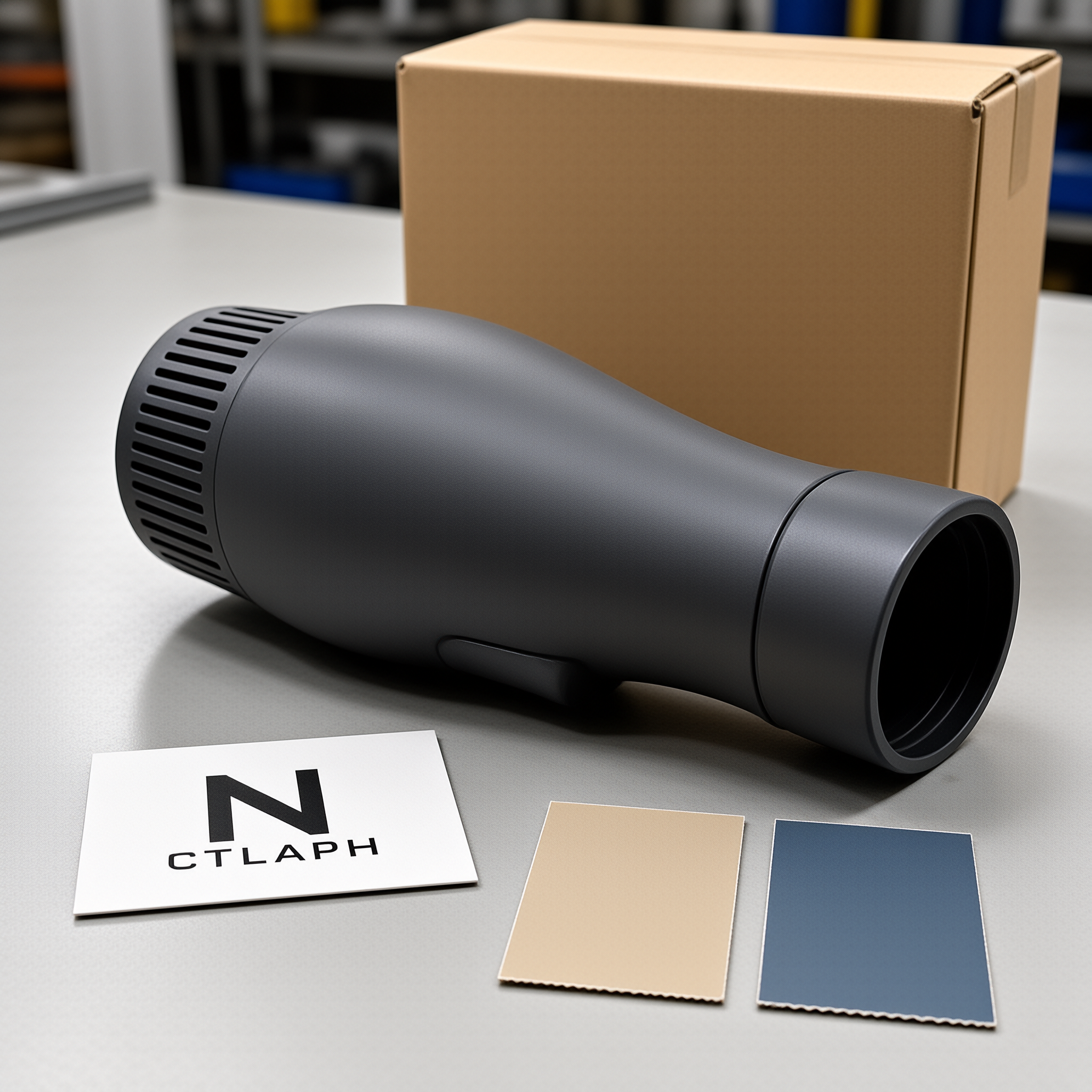
Two rows cause most of the friction. Printed retail boxes carry a minimum of their own, separate from the unit minimum, and they need their own artwork approval; buyers who plan the carton at the same moment as the unit print usually find this out too late. The print charge is the other one. Logo printing is charged per unit below 1,000 units and is free at 1,000 units and above, which changes the arithmetic on whether to consolidate two smaller runs into one.
How to Plan a Private Label Hair Dryer Order
The sequence below is the one we walk through with buyers on a first private label project. It moves from the constraint that is hardest to change, the model list, to the ones that are easiest. Buyers who want to benchmark minimum order structures against other categories can start with the research indexed on Google Scholar - Minimum Order Quantity Research and the production planning models collected on arXiv - Production Planning Literature. Neither replaces a quote, but both sharpen the questions.
Fix the model list before the volume target. Start with how many distinct models you need, not how many units in total, because every model carries its own minimum.
Split total volume across models and test each one. If a model lands below 100 units, either raise it to 100 or drop it. Never assume two partial models add up to one full one.
Set the colour split inside each model. This is where small colour demands can be absorbed without breaking the minimum, as long as the colours are standard.
Confirm the logo artwork, size and print position. Ask for a digital proof and approve it in writing, because the production clock only starts after approval.
Treat packaging as a separate line item. Printed retail boxes have their own minimum and their own proof, so budget volume and time for them independently.
Check whether 1,000 units is reachable. Below that level the logo print is charged per unit; at 1,000 and above it is free. Compare the saving against the cost of carrying the extra stock.
Confirm documentation for the model and the destination market before the order is placed, not after.
Lock the timeline from approval, not from enquiry. Production runs 25-35 days after deposit is received and artwork is approved.
Lead time sits at the end of that sequence for a reason. The 25-35 day window opens only after payment and artwork approval, and artwork approval is the step buyers consistently underestimate. Every revision round happens before the window opens, never inside it.
Documentation to Confirm Before You Commit
Ask which documents the model already holds before the logo conversation starts. The four names to check are CE, RoHS, FCC and CB, and they attach to the model and its electrical configuration rather than to the logo. For background on how the CE marking framework works, European Commission - CE Marking sets out the obligations, and IECEE - CB Scheme explains the CB certification route. Confirm scope in writing for each destination market you plan to sell into; multiple countries on one order usually means more than one document set.
Frequently Asked Questions
- What does the logo minimum cover on a private label hair dryer?
- It covers the smallest quantity of a single model we will accept for a custom logo print, which is 100 units. It does not extend to other models, to custom paint colours or to printed retail packaging.
- How many units do I need for a custom logo on a hair dryer?
- 100 units of one model. Standard colours within that model can be mixed to reach the number, but units from a different model cannot be used to fill the gap.
- Can I mix colours within one hair dryer model?
- Yes. Standard colours can be mixed inside the same model to reach its 100 units, so 40 units in one colour and 60 in another is valid. Custom paint colours are a separate paint run with a much higher minimum.
- Can different hair dryer models be combined to reach the minimum?
- No. The minimum applies per model, not per order. A 200-unit order spread across four models at 50 units fails the minimum for all four, even though the total volume looks healthy.
- Do stock hair dryers without a logo have a minimum order quantity?
- No. Stock items with no logo carry no minimum order quantity. As soon as a logo, a custom colour or printed packaging is added, the item is no longer a stock item and the relevant minimum applies.
- Is logo printing free above a certain quantity?
- Logo printing is charged per unit below 1,000 units and becomes free at 1,000 units and above. Whether consolidating two smaller runs is worthwhile depends on the stock you can absorb, not on the saving alone.
- How long does production take after the logo artwork is approved?
- 25-35 days after deposit is received and artwork is approved. Artwork revision rounds sit before that window, so approving artwork early is the single most effective way to shorten the overall timeline.