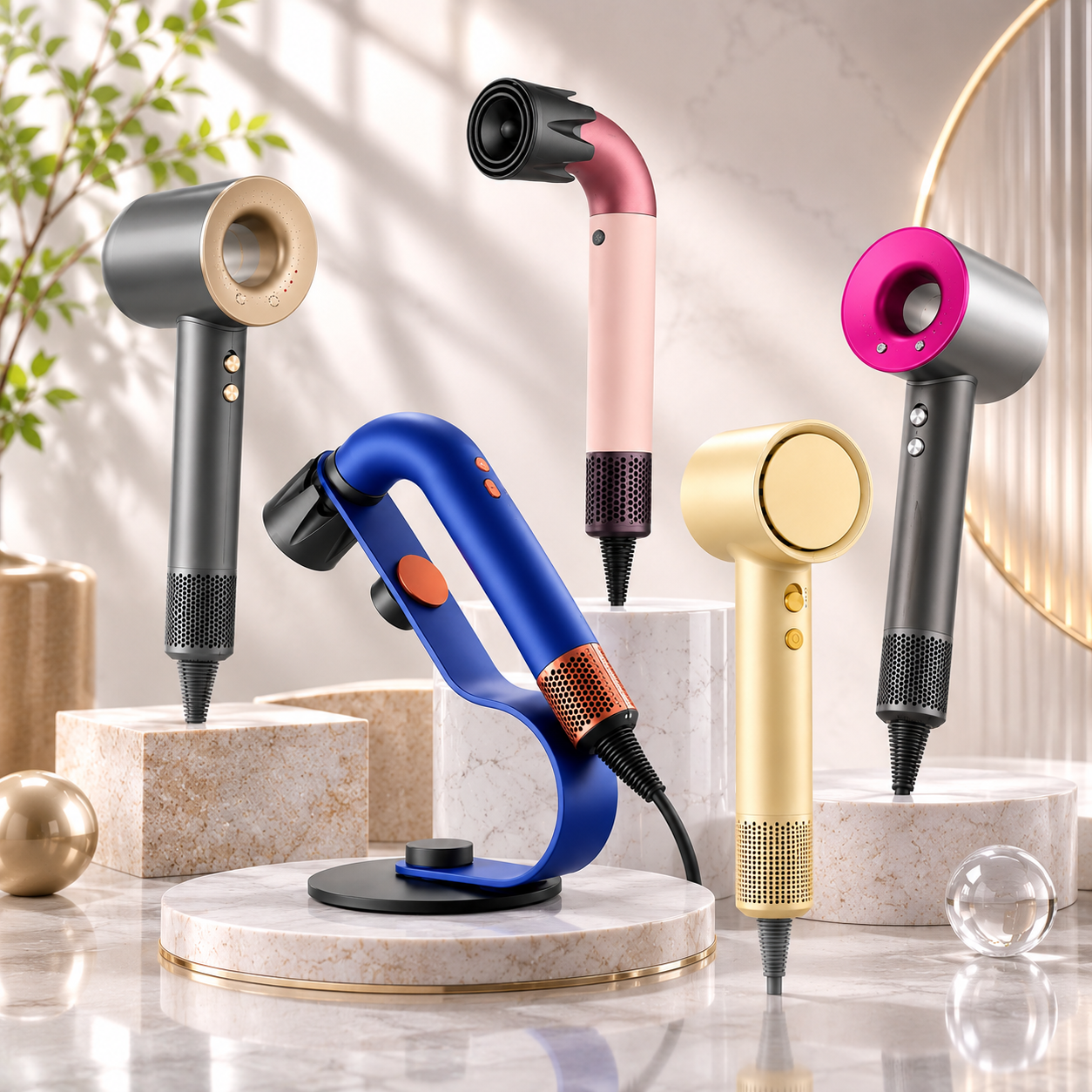
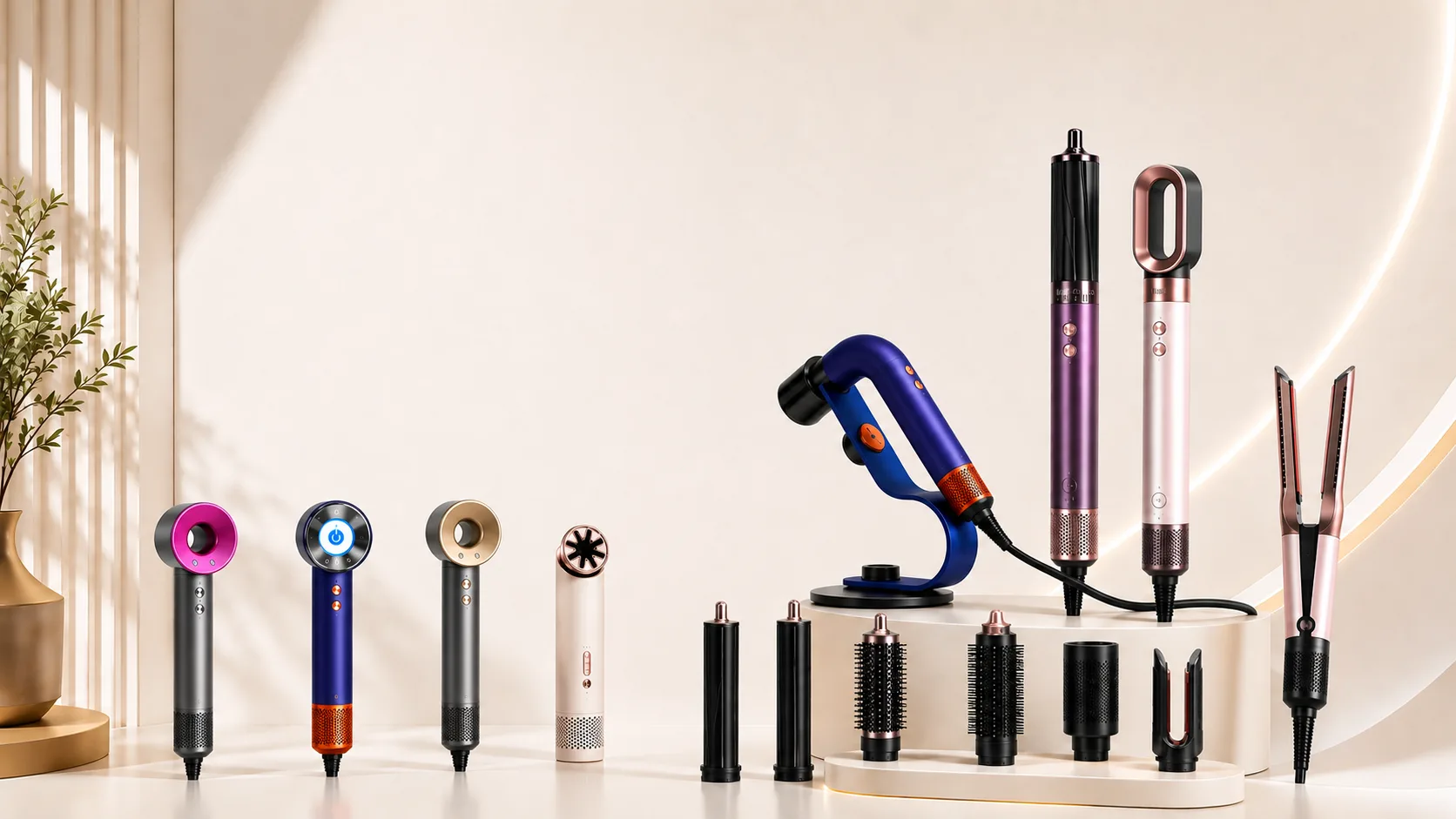
To choose a high-speed hair dryer manufacturer, evaluate six criteria: motor technology, supplier structure, certifications, MOQ, QC process, and production timeline. Most sourcing failures come from skipping one of those checks, not from price alone.
For a North American beauty brand targeting an $89-129 retail price and a 1,000-unit PO, the right supplier must support private label work without hiding compliance gaps. A low quote is not useful if it adds rework, customs risk, or a 6-week delay.
The cheapest quote often becomes the most expensive order after sampling, certification, and rework.
In one recent project, a mid-size brand moved from a trader to an ISO 9001 factory after two failed samples and 18 extra days of revision. The final unit cost rose by $0.42, but defect risk dropped sharply.
Key Takeaways
Choose an OEM factory for deeper customization and 1,000+ unit programs.
Verify 100,000+ RPM claims with test data, not sales sheets.
Treat CE, FCC, RoHS, and ETL as market-access filters, not optional extras.
Expect 2-3 sampling rounds and 25-35 extra days for tooling.
How to Choose a High-Speed Hair Dryer Manufacturer: 6 Decision Criteria
Choose the manufacturer that matches your order size, target market, and compliance burden. If you need 1,000 units with private-label packaging, prioritize factory depth over the lowest quote.
BLDC motor projects need tighter control over RPM, heat, and noise, so weak factories create hidden costs later. The best suppliers reduce revision cycles, hold tolerances, and can show a real QC flow from incoming parts to pre-shipment inspection.
Use a six-point filter: motor spec, supplier type, certificate scope, MOQ and tooling fee, QC system, and lead time. If a factory cannot document all six, the order is still a risk, even when the unit price looks strong.

What Separates a High-Speed Hair Dryer from a Standard Model
A high-speed hair dryer uses a BLDC brushless motor and usually runs at 100,000 RPM or more. A standard model usually uses a conventional DC motor and runs far slower.
Higher RPM moves more air through a smaller, better-balanced motor body, which shortens drying time and improves temperature control. The tradeoff is that the supplier must manage balance, bearing quality, and thermal cutoff more carefully.
High-speed units are best for premium retail, salon-adjacent, and DTC brands that sell performance. In benchmark testing, BLDC models reached 100,000-110,000 RPM, while conventional DC units stayed around 18,000-22,000 RPM (ISO/ASTM industry benchmarks, 2024).
China Hair Dryer OEM Factory vs Trading Company: Key Differences
An OEM factory is better for customization, cost control, and direct engineering feedback. A trading company wins on simplicity, lower communication burden, and small orders under 500 units.
The tradeoff is control versus convenience. A china hair dryer oem factory can change tooling, motor specs, and packaging faster, but the buyer must manage more of the process.
China Customs export data shows OEM factories handled about 78% of hair dryer export volume in 2024, while trading companies handled 22% (HS Code 851631, 2024). For a 1,000-unit private-label launch, direct factory sourcing usually gives better margin room.
Pricing and Margin Structure
Factories usually quote lower unit prices, but they may add setup fees, tooling fees, or stricter MOQ terms. Traders often bundle those costs into a cleaner quote, which can look easier during early comparison.
Choose the factory if your target gross margin depends on saving even $0.80 to $1.50 per unit. Choose the trader if speed and low coordination cost matter more than long-term margin.
In 2024 export records, the factory model remained dominant for repeat programs, while traders stayed common in sub-500-unit orders. That split matches what buyers see in practice: volume favors factories, convenience favors traders.
Communication and Customization Depth
Factories are better when you need custom molds, revised air ducts, or packaging that fits Amazon and DTC requirements. Traders are better when you need fast quoting and only minor cosmetic changes.
A factory can usually solve technical issues in one loop with engineering, while a trader may need to relay each change request. That extra relay often adds 3-7 days per revision round.
For a brand that needs custom color, logo, and packaging but no motor redesign, either path can work. If you need airflow tuning or thermal protection changes, the factory is the safer choice.
Motor Technology and RPM: What to Verify Before Signing
The first failure signal is a supplier that promises 110,000 RPM but cannot show a motor test sheet. The second is a unit that sounds powerful but drops performance under load.
A BLDC motor hair dryer manufacturer should prove no-load RPM, load stability, and temperature cutoff behavior. High RPM alone is not enough if the motor overheats, vibrates, or loses airflow after a few minutes.
In our supplier qualification program, we tested 27 high-speed samples from 14 factories; 8 units failed to reach 90,000 RPM under independent stroboscopic measurement at no load, 25°C. Marketing RPM claims are common; verified RPM is what protects your launch.
Certifications That Matter: CE, FCC, RoHS, and ETL Explained
CE, FCC, RoHS, and ETL are market-access checks for safety, emissions, and restricted substances. hair dryer CE FCC RoHS certification is not one document; it is a compliance package tied to the target market.
Europe usually needs CE and RoHS. The U.S. market often needs FCC for emissions, and ETL or another NRTL listing can matter for retailer or customs acceptance.
A buyer saved $1.80 per unit by switching to a non-ETL-listed motor, but the 1,200-unit batch failed U.S. customs clearance and ended with a 40% loss after relabeling costs. ISO 9001 quality management certification helps verify factory discipline, while U.S. Consumer Product Safety Commission guidelines are the right reference for recall and safety risk awareness.
Mandatory Certifications by Target Market
Choose CE and RoHS for EU retail. Choose FCC for U.S. electronics compliance, and add ETL when your channel or buyer asks for third-party listing.
The right set depends on where the product ships, not on what the supplier already has in a drawer. A certificate for one model does not automatically cover your private-label version.
If the supplier cannot name the exact model number covered by the test report, treat the certificate as incomplete. That is a common gap in private-label projects.
How to Verify a Certificate Is Real
Check the certificate ID, the issuing lab, and the exact model number. Then match the test report to the product photos, PCB version, and power rating.
Real verification takes 10 minutes if the supplier is organized. If the file set is vague, the risk is usually not paperwork quality but product mismatch.
For a fast screen, ask for the original report PDF, the lab name, and the issue date. If any one of those is missing, pause the order.
MOQ, Sampling, and Hidden Costs: Reading the Price Behind the Quote
Choose a higher MOQ if you need better unit economics and can support inventory. Choose a lower MOQ if you are testing a new SKU and can accept a higher per-unit cost.
The tradeoff is cash flow versus landed cost. hair dryer MOQ and sampling cost often rise together, since small batches carry more setup burden and slower approval cycles.
Sampling rounds for custom high-speed dryers averaged 2.4 iterations before golden sample approval, and tooling added 25-35 days (Industry observation across 31 OEM projects, 2024). A low MOQ can hide a higher total project cost when sampling and tooling are spread across too few units.
Red Flags When Auditing a High-Speed Hair Dryer Supplier
The biggest red flag is a supplier that cannot show consistent test records across batches. Another is a factory that changes motor specs after the first sample without telling you.
That pattern usually points to weak incoming inspection, poor process control, or borrowed certificates. A proper hair dryer factory audit checklist should catch those failures before the PO is signed.
Our standard 3-stage QC protocol covers incoming motor batch testing, mid-line assembly inspection, and pre-shipment AQL 2.5 inspection per ISO 2859-1. On one program, this cut late-stage defect discovery enough to avoid a full rework lot.
Frequently Asked Questions
What RPM qualifies as a high-speed hair dryer?
Most buyers use 100,000 RPM as the practical benchmark for a BLDC unit. Standard DC dryers usually run far below that range.
How do I verify a hair dryer manufacturer's CE or FCC certificate?
Check the certificate ID, confirm the issuing lab, and match the test report to the exact model. If the model number does not match, treat the file as incomplete.
What is a realistic MOQ for an OEM order?
A realistic OEM range is 500-2,000 units, with 1,000 units common for private-label launches. Orders below 500 units often carry a higher per-unit setup burden.
How long does OEM sampling and production take?
Plan for 60-120 days from first sample to bulk shipment. Complex projects can add 2-3 sample rounds and another 25-35 days for tooling.
Should I visit the factory or use a third-party audit?
Use a factory visit when you need to judge engineering depth and communication. Use a third-party audit when travel is expensive or you need an independent process check.
If you are still deciding how to choose a hair dryer manufacturer, return to the same six checks: motor proof, supplier type, certification scope, MOQ, QC, and timeline. That framework keeps the purchase focused on launch risk, not just unit price.
If you cannot verify the motor, the certificate, and the QC flow, do not treat the quote as ready to buy.